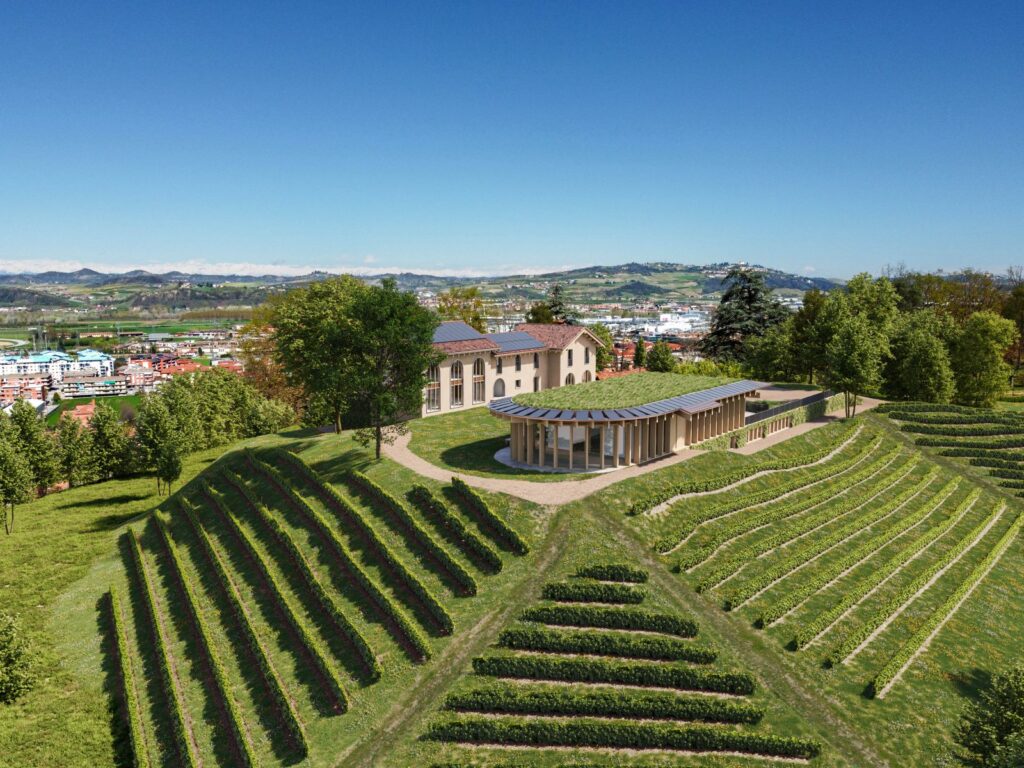
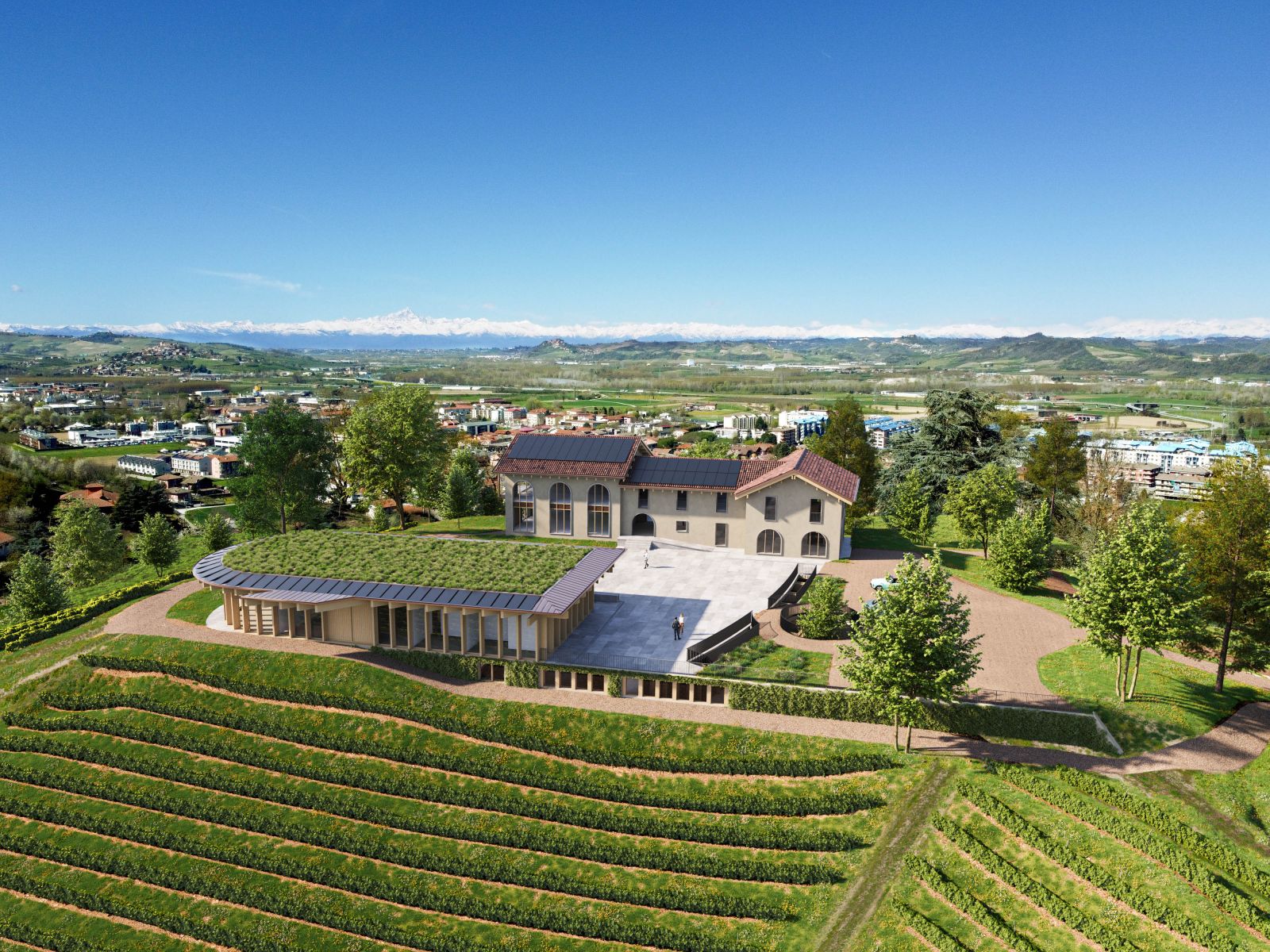
Located in the hills of Alba, Italy, the architectural project of the Miroglio Winery seeks to integrate winemaking tradition with a contemporary and sustainable design. The intervention respects the morphology of the landscape, combining existing structures with a new building featuring clean lines and natural materials, achieving harmony between the rural and the modern. Through hyper-realistic renders, the relationship between the architecture and the surrounding environment is captured, highlighting the topography of the vineyard and the interplay of light with the surfaces.
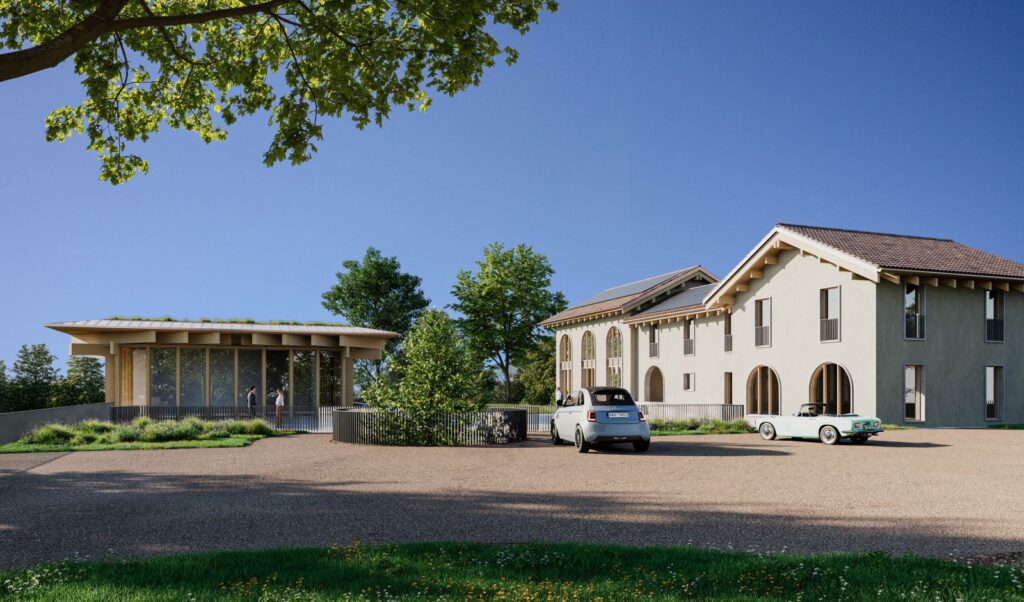
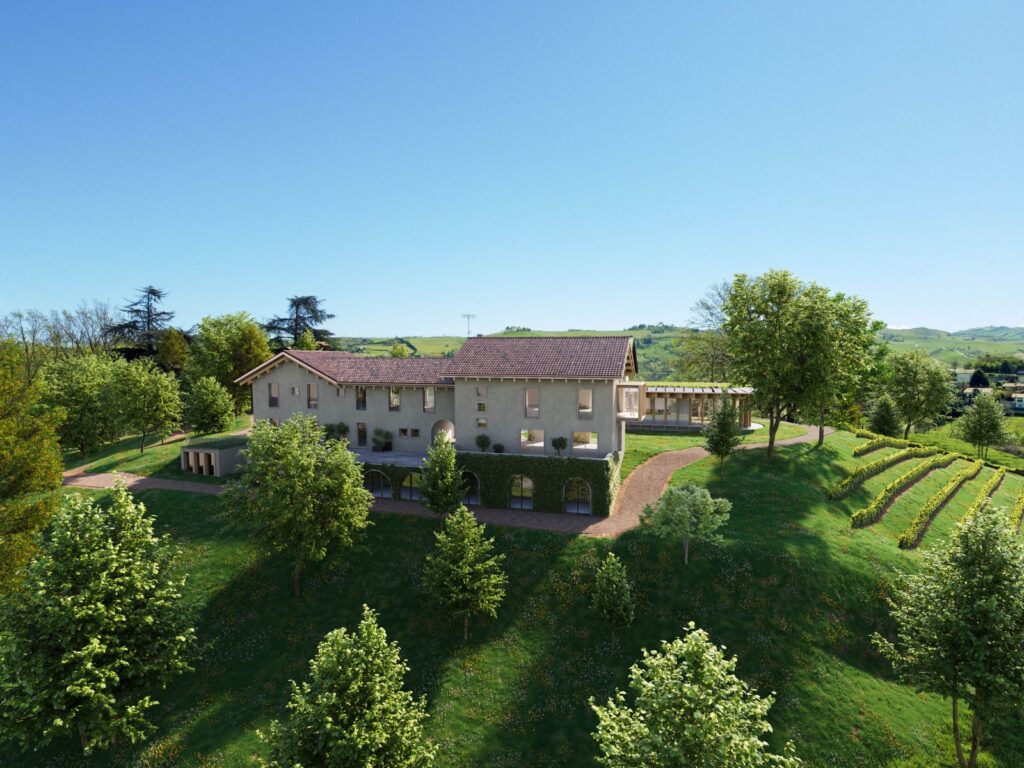
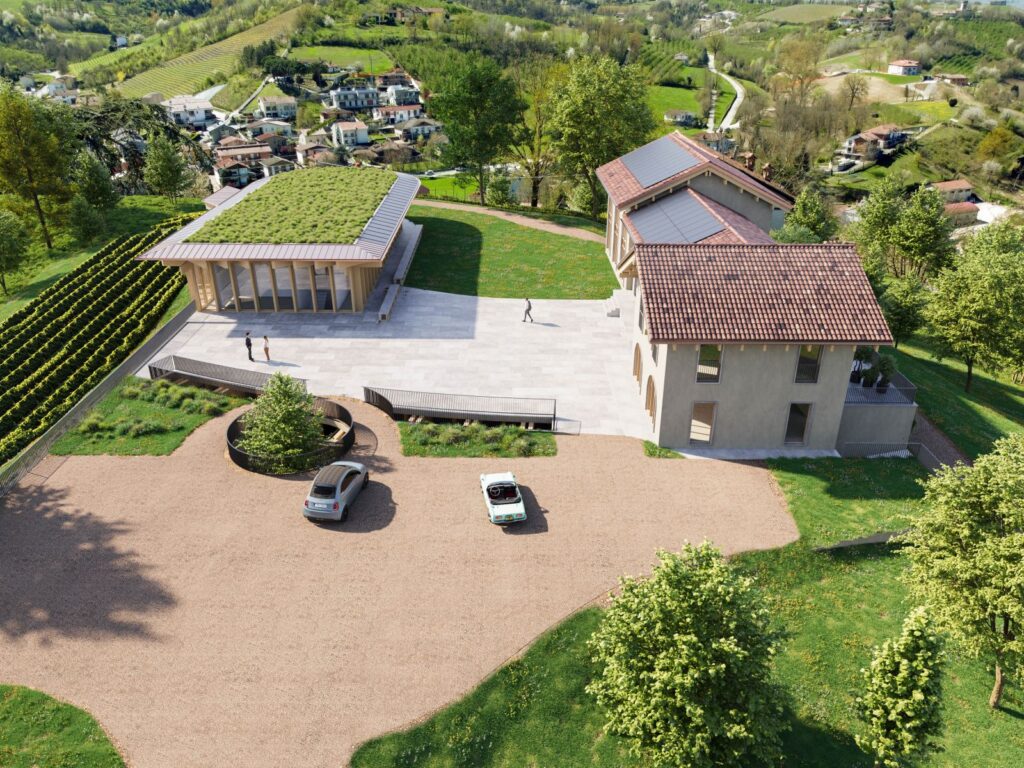
The architectural proposal is organized around two main volumes. The historic building retains its identity with neutral-toned façades and traditional tile roofs, evoking the essence of the region’s old rural houses. In contrast, the new construction features a contemporary design with a green roof that blends into the landscape, reducing visual impact and improving thermal efficiency.
The open structure with wooden pillars allows for a seamless integration with the surroundings, while large glazed surfaces frame panoramic views of the vineyards and the mountains of Piedmont.
The architectural renders accurately detail the materials, textures, and lighting conditions at different times of the day, providing a realistic representation of the project in its natural context. The visual composition emphasizes the connection between the interior and exterior spaces, highlighting the fluidity of the design and its ability to engage with the territory.
From aerial views to ground-level perspectives, the 3D visualization allows for an appreciation of the balance between tradition and innovation in this winery.
Share on:
Our Paths Have Crossed
Let's make it
memorable.
Starting a new project or want to collaborate with us?